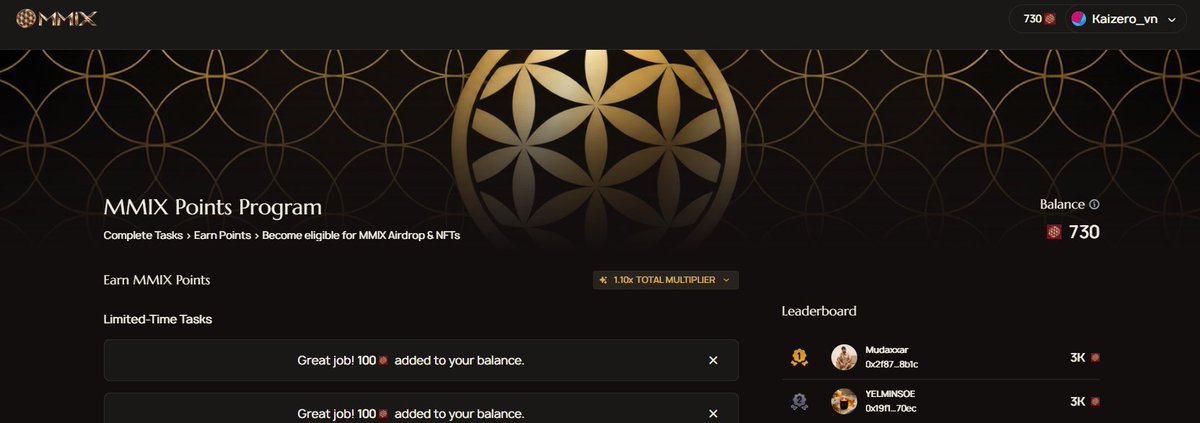
MMIX Points Program
Complete Tasks > Earn Points > Become eligible for MMIX Airdrop & NFTs
Earn MMIX Points
Limited-Time Tasks
Community
Repeatable Tasks

Leaderboard





History
Social feed

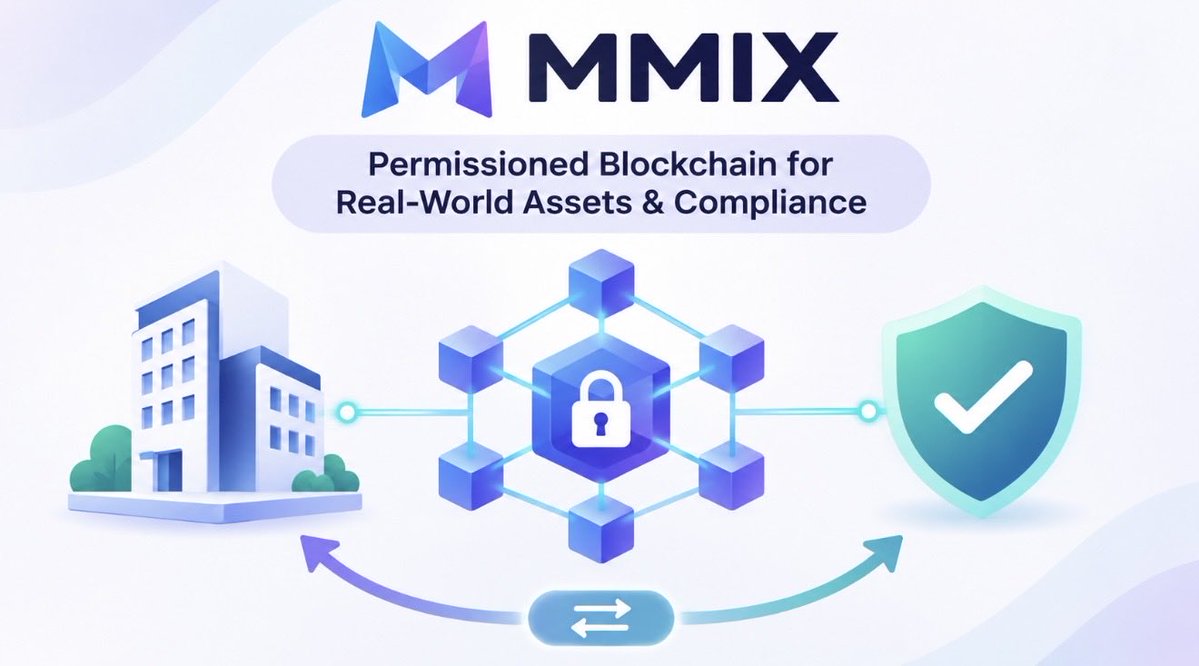
The next big step for blockchain may not be bringing more people into crypto. It may be bringing the real economy on chain. That's what caught my attention about @MMIX_io We've spent years watching blockchains compete over transaction speed, lower fees, and scalability. Yet one fundamental question remains: How do we make blockchain infrastructure genuinely useful for businesses managing real-world assets? MMIX is approaching this challenge from a different direction. 1. A permissioned Layer 1 built around accountability Most public blockchains prioritize open participation. Anyone can deploy a smart contract, and applications can operate without prior approval. MMIX takes a different approach. The MMIX Foundation reviews companies and projects before they join the network, while validators are appointed rather than anonymously participating. This introduces a trade off: less permissionless freedom, but a framework designed around identifiable participants and institutional requirements. For businesses handling regulated assets, that distinction could matter. 2. Bringing compliance closer to the blockchain itself Tokenizing real estate or financial assets isn't simply about creating tokens. Real ownership involves legal rights, investor eligibility, transfer restrictions, and ongoing responsibilities. MMIX is designed with an on-chain compliance registry that can record verification status, KYC tiers, and regional requirements. Instead of treating compliance as an entirely separate process, the network aims to make it part of how applications manage asset transfers. That could help address one of the practical challenges facing RWA adoption. 3. Ethereum compatibility without abandoning familiar tools MMIX is designed to be EVM compatible. Developers can work with Solidity and familiar Ethereum tooling while building applications for a network focused on approved participants and real-world business use cases. This matters because adoption doesn't always require reinventing the developer experience. Sometimes, it requires adapting existing technology to a different set of users. 4. MMIX Districts: an early introduction to the ecosystem One initiative worth watching is MMIX Districts. The project introduces a collection of 3,000 digital districts, planned as a free mint on Ethereum. The collection is intended to transition to the MMIX network around mainnet, currently targeted for 2027. What interests me is the connection between digital collectibles, community participation, and a broader ecosystem focused on real world utility. However, a district NFT should not be confused with legal ownership of physical property. That distinction is important. 5. The questions that will ultimately determine success A permissioned network alone doesn't guarantee adoption. What i want to follow is whether MMIX can demonstrate: Real businesses deploying useful applications Tokenized assets with clearly defined legal rights Transparent governance and meaningful accountability Sustainable network activity beyond early incentives A user experience simple enough for everyday adoption These are the things that will separate an interesting concept from infrastructure people actually use. I'm currently exploring the MMIX ecosystem and participating in its Reputation & Contribution campaign through @NucleusCodes The campaign offers GTD whitelist opportunities for eligible participants on its leaderboards. But beyond the whitelist, i'm more interested in seeing whether this model can connect blockchain infrastructure with genuine economic activity. My biggest takeaway: The future of RWA may not be decided by which blockchain tokenizes the most assets. It may be decided by which networks make those assets practical, accountable, and useful in the real world. That's why i'm keeping MMIX on my research list. What do you think? Can permissioned blockchain infrastructure accelerate real world adoption, or does it sacrifice too much of what makes Web3 valuable? https://t.co/vDF1hxUI4y https://t.co/J7kncl6SFW https://t.co/MnCeA7N5PW https://t.co/jdmcw3prPD #MMIX #RWA #Web3

One detail in @MMIX_io's official FAQ deserves more attention: users may not always need to hold MMIX Coin to interact with applications on the network. MMIX explains that applications can choose to cover network transaction fees on behalf of their users. This introduces an important distinction between how a blockchain processes transactions and how customers experience the cost of using an application. At the protocol level, MMIX Coin is designed to serve as the native asset used to pay transaction fees. At the application level, however, a business may decide to absorb those fees rather than requiring every customer to acquire and manage the native asset directly. Consider a hypothetical eCommerce application built on MMIX. A customer might want to complete a purchase, receive loyalty rewards, or interact with a digital membership. Requiring that customer to first obtain a blockchain token would introduce additional steps into an otherwise familiar commercial process. Under the fee-sponsorship model described in MMIX's FAQ, the application could instead handle the network fee while presenting a more conventional payment experience. This creates three distinct considerations. 1. Network fees and customer payments are separate concepts. A blockchain transaction can require its native asset for execution without requiring the end user to personally hold that asset. The application may handle the underlying fee obligation. 2. Businesses gain flexibility in designing onboarding. A merchant could theoretically incorporate network costs into its operating expenses rather than exposing blockchain fee management to customers. This is an educational example of the documented fee-sponsorship option, not confirmation that a particular MMIX merchant has implemented it. 3. Fee sponsorship does not eliminate transaction costs. The cost still exists at the network level. Sponsorship changes which participant pays it, rather than removing the underlying requirement. That distinction also matters when evaluating MMIX Coin's proposed utility. The official documentation identifies network transaction fees as a core use of the native asset, while allowing applications to determine how those costs are presented to their customers. MMIX is targeting mainnet in 2027, so this should be understood as a documented architectural design rather than evidence of an already operating production payment system. The FAQ also states that applications can build MMIX Coin into payments and loyalty products, with additional uses to be announced as the ecosystem develops. For readers exploring the community platform: https://t.co/x8qccBPDGQ Official documentation: https://t.co/Xx8xOaoSQ0

One of the more interesting details in @MMIX_io's architecture is how it plans to handle compliance directly at the transaction level. According to MMIX's official documentation, the network is designed around an on-chain compliance registry that records verification status, KYC tiers, and regional restrictions. Applications are expected to check these conditions before transferring value or issuing assets. This creates an important technical distinction between simply verifying someone during registration and enforcing eligibility when an asset changes hands. Consider a hypothetical tokenised asset available only to investors who meet specific jurisdictional requirements. A traditional onboarding process might verify the initial buyer. But what happens when that buyer wants to transfer the token to another wallet? The second transaction introduces a new eligibility question. The recipient may operate under different regulations, have a different verification status, or lack permission to hold that particular asset. MMIX's proposed architecture addresses this category of problem by integrating compliance checks into the network's transaction workflows. Three elements are particularly relevant: Verification status: Establishes whether a participant has completed the required checks. KYC tiers: Allow applications to distinguish between different verification levels rather than treating every participant identically. Regional rules: Provide a mechanism for applying geographic restrictions when an asset or transaction requires them. These elements are documented design features, not evidence that every possible regulatory requirement has already been implemented or independently validated. There is also a practical consideration for developers. MMIX describes itself as EVM-compatible, meaning developers can work with Solidity and familiar Ethereum tooling while building within a permissioned environment. However, compatibility with existing development tools does not remove the need to design appropriate asset-specific permissions and transaction restrictions. The distinction is particularly relevant to real-world asset issuance, where transferring a blockchain token may involve legal obligations beyond executing a smart contract. MMIX currently targets a 2027 mainnet launch, so the compliance architecture should be understood as the network's documented design rather than a fully demonstrated production capability. The official MMIX Trust Center also states that independent reviews are planned before mainnet, with reports to be published as they are completed. Explore the MMIX community platform: https://t.co/x8qccBPDGQ


Not every blockchain needs to be permissionless. But every blockchain needs to justify its trust model. @MMIX_io There's a common assumption in Web3: the more permissionless a network is, the better it must be. I think this perspective deserves a closer look, especially when discussing Real-World Assets (RWAs). Let's consider two different approaches. 1. Permissionless Blockchain Anyone can generally participate in the network, deploy applications, and interact with smart contracts without requiring prior approval. The advantages are clear: Open participation. Reduced dependence on gatekeepers. Greater composability. Permissionless innovation. But openness also creates challenges when dealing with regulated financial assets, institutional issuers, and jurisdiction-specific requirements. 2. Permissioned Blockchain Participation is controlled through predefined authorization mechanisms. Projects, issuers, or validators may need to satisfy specific requirements before joining the ecosystem. This introduces different trade-offs: More controlled participation. Easier integration of eligibility requirements. Greater ability to enforce access policies. Potential dependence on governing authorities. But here's the question people should not ignore: Who controls the permissions? Who decides which validators can participate? How transparent is the approval process? What happens if the governing organization makes a poor decision? And how can users evaluate whether the network is genuinely secure? These questions matter because permissioned infrastructure can reduce certain operational risks while introducing new governance and centralization risks. This brings me to MMIX. MMIX is developing a permissioned Layer 1 focused on RWAs and business applications. Its model involves vetted projects and issuers, alongside validators appointed or approved through the MMIX Foundation's framework. I find this approach interesting, but I don't think permissioned architecture should automatically be considered superior. It solves a different set of problems. For RWA infrastructure, controlled participation may be useful. However, the long-term credibility of the network will also depend on governance transparency, validator independence, security, and accountability. My perspective: The future of blockchain shouldn't be a competition over which network is the most permissionless. It should be about choosing the right architecture for the problem being solved. Decentralization is not just a checkbox. It's a spectrum of design decisions, and every decision comes with a cost. That's what I want to examine more closely as MMIX develops.

Compliance and blockchain have always had an interesting relationship. @MMIX_io Blockchains were designed to enable open participation. Anyone can interact with smart contracts without asking a central authority for permission. But when we move into real-world assets (RWAs), the requirements become more complicated. Not every financial asset can be accessed by every participant in every jurisdiction. This creates an important infrastructure challenge: How can a blockchain enforce compliance rules without making every transaction dependent on manual intervention? One approach is onchain compliance. Let's break it down. Imagine a tokenized real-world asset with three different participants: → Alice has completed identity verification. → Bob has not completed KYC. → Charlie is verified but restricted from participating in a specific market. A smart contract can potentially use verification status, permission levels, and regional restrictions as conditions before allowing certain operations. Instead of treating every wallet address equally, the application can evaluate whether an interaction satisfies predefined rules. There are three important concepts here: 1. Identity Verification Establishing whether a participant has completed the required verification process. 2. Permission Management Defining which participants can access specific assets or perform certain actions. 3. Transaction Restrictions Applying rules that determine whether a transaction is permitted under the relevant conditions. This is particularly relevant to MMIX. MMIX is developing a permissioned Layer 1 focused on RWA and business applications, with onchain compliance features such as verification status, KYC tiers, and regional restrictions. What I find interesting is the infrastructure philosophy behind this direction. Compliance doesn't necessarily have to be treated as something completely separate from blockchain execution. It can become part of how applications define and enforce their operating rules. However, there's an important distinction: Onchain compliance does not automatically mean personal identity documents or sensitive KYC information are stored publicly onchain. The actual data architecture, privacy protections, and verification mechanisms matter enormously. Personally, I believe this is one of the more important areas to understand when studying RWA infrastructure. Because bringing assets onchain is only one part of the challenge. Building an environment where those assets can operate under real-world requirements is another. The real question isn't whether blockchain can support compliance. It's how to implement compliance without unnecessarily compromising privacy, security, and programmability.

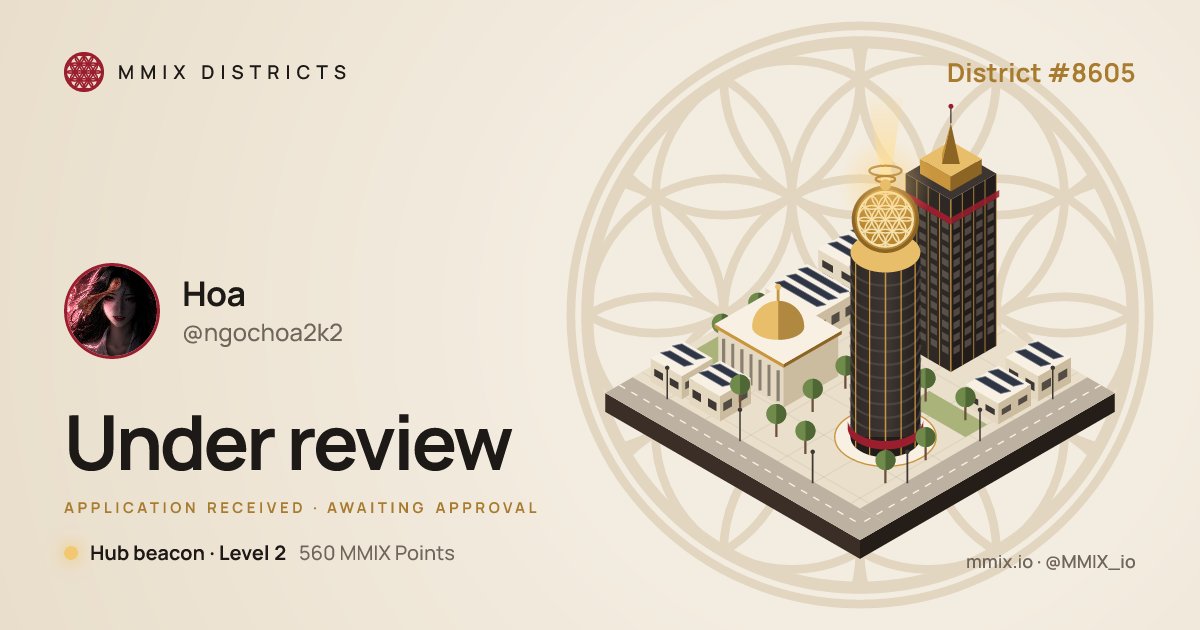
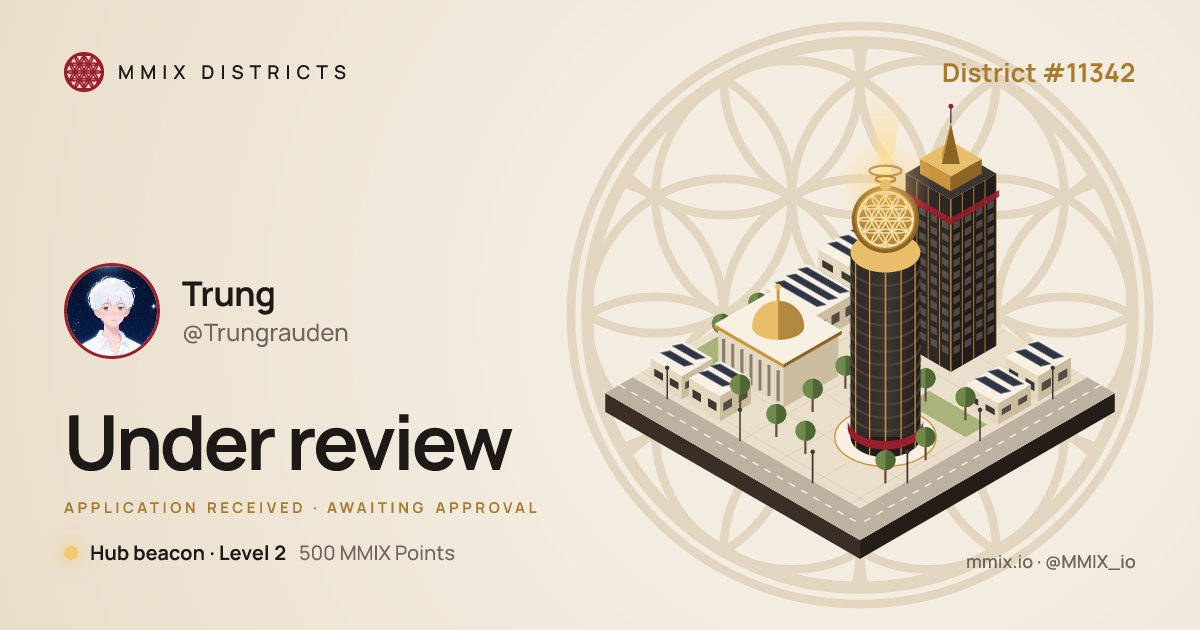
Why can't we simply put real-world assets on any blockchain and call it innovation? I've been exploring the RWA sector, and one thing I find particularly interesting is that bringing real-world assets onchain is not just about tokenization. It's about building the infrastructure that allows these assets to exist, operate, and interact within a digital environment. Think about it. A traditional DeFi protocol can often operate permissionlessly. Anyone can deploy a smart contract, provide liquidity, or interact with applications. But RWAs introduce a different set of requirements. → Identity: Who is allowed to participate? → Compliance: How do we handle KYC and regional restrictions? → Asset integrity: How do we establish confidence in the relationship between an onchain token and its underlying real-world asset? → Infrastructure: How should issuers, validators, and applications coordinate? This is where I find MMIX's approach interesting. MMIX is developing a permissioned Layer 1 designed around RWA and business use cases, with EVM compatibility and onchain compliance features. Instead of treating permissionless access as the only design priority, it introduces a framework where projects and validators are vetted. Personally, I think this highlights an important direction for blockchain infrastructure. The next stage of adoption might not be about putting everything onchain. It might be about making onchain systems suitable for the assets and businesses that already exist in the real world. Of course, there are trade-offs. Permissioned infrastructure raises important questions about decentralization, governance, and trust. And those are exactly the things I want to understand better as this sector develops. RWA is not just another narrative. The infrastructure behind it deserves much deeper attention. I claimed District #11342 in @MMIX_io Districts 🏙️ Applied for the free-mint whitelist. Claim your plot before the city rises: https://t.co/FjlFPVoRNK

Good Night 🌙 Most blockchains were built around moving digital assets. But businesses need something more than that. Think about a real estate company that wants to tokenize ownership of its properties. It needs more than a token and a wallet. It needs a reliable way to identify the asset issuer, establish trust, manage ownership records and connect digital transactions to something that actually exists in the real world. This is one of the problems @MMIX_io is designed to address. MMIX is building a permissioned Layer 1 blockchain focused on businesses and Real-World Assets (RWAs). The permissioned approach is important because business environments often require clearer participation rules, accountability and greater control over who can perform certain activities. For example, if a property is represented on-chain, people need to understand who issued that token and what real-world asset it represents. That’s why purpose-built infrastructure matters. MMIX is working toward a blockchain ecosystem where real-world business activity and on-chain technology can work together. The interesting part isn’t simply putting assets on a blockchain. It’s making the connection between the digital record and the real-world asset meaningful. Explore MMIX: https://t.co/JaI6lreI0s #MMIX #RWA #Blockchain

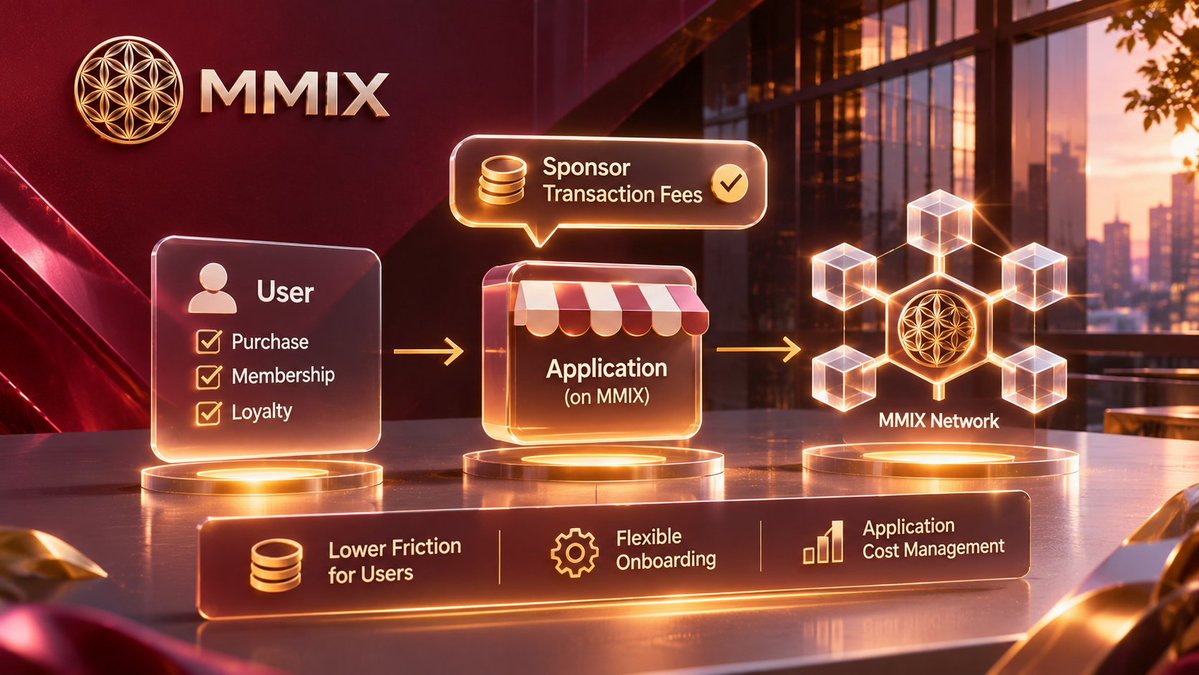
@MMIX_io introduces an interesting design choice in its blockchain architecture: applications can sponsor transaction fees instead of requiring every user to hold the network's native coin. This raises a practical question for businesses building on MMIX: how should transaction costs be managed when blockchain infrastructure is integrated into everyday commercial applications? The official MMIX FAQ describes a model in which MMIX Coin serves as the native asset for network transaction fees, while applications can choose to cover those fees on behalf of their customers. The distinction becomes particularly relevant when examining the economics of blockchain-based services. 1. Transaction execution and user payment are different layers. A transaction may require a native network asset for processing, but the person initiating the interaction does not necessarily need to manage that asset directly. For an application developer, this creates flexibility in deciding how blockchain costs appear within the customer experience. 2. Fee sponsorship creates an operating expense for applications. Consider a hypothetical digital membership platform that processes 100,000 blockchain interactions per month. If the application sponsors every transaction, its operating budget must account for the associated network fees. The figure is illustrative, not a reported MMIX transaction metric. A business would therefore need to evaluate expected transaction volume, average network costs, and the financial sustainability of its sponsorship policy. 3. The model introduces a distinction between technical accessibility and economic responsibility. Removing the requirement for customers to acquire MMIX Coin could simplify onboarding. However, the application still needs a mechanism to fund transactions, manage its fee balance, and decide which user activities qualify for sponsorship. These are implementation considerations rather than confirmed features of a live MMIX fee-management dashboard. 4. MMIX's planned mainnet creates an important implementation boundary. MMIX currently targets a 2027 mainnet launch. Its fee-sponsorship model is documented, but production transaction volumes, actual network fees, and operating costs have not been established in the cited FAQ. The official documentation also describes payments, eCommerce, financial services, and loyalty applications as potential use cases. For developers, the documented design provides a basis for evaluating who pays transaction fees, while actual cost modelling will depend on network parameters and application activity after launch. Official FAQ: https://t.co/kkm8psSQ2z Community Hub: https://t.co/KvbYEJqIPc
@MMIX_io has introduced MMIX Districts, a free-mint NFT collection built around isometric city districts, with an initial mint planned on Ethereum and a transition to the MMIX network at mainnet. What makes this initiative worth examining is its two-stage approach to revealing a digital district. The official whitelist page presents the collection as a way to claim a plot before the city develops. The concept connects a visual representation of a district with the broader MMIX ecosystem, rather than presenting the NFT simply as a standalone collectible. However, the collection's proposed transition between networks introduces a practical technical question: how can an NFT maintain a recognizable identity when its associated ecosystem changes? An NFT issued on Ethereum exists within Ethereum's contract environment. Its token identifier, contract address, metadata references, and transaction history are associated with that environment. Moving the experience to another blockchain is not automatically equivalent to transferring the original Ethereum token. Different implementation approaches can preserve different aspects of the experience. For example, a project could associate an existing token with a new representation, use a migration mechanism, or introduce additional functionality on the destination network. These are general technical possibilities, not confirmed implementation details for MMIX Districts. The distinction matters because the collection's visual development and its blockchain migration are separate technical processes. Updating what a district represents does not necessarily require the same mechanism as establishing how that district is recognized on another network. MMIX has documented the intended Ethereum-to-MMIX progression, but the available whitelist description does not establish the complete migration mechanism, the relevant smart contracts, or the precise rights attached to a district. The whitelist process itself is more concrete. Applicants are instructed to connect their X account, complete specified social interactions, describe their Web3 experience and interest in real-world assets, and provide an EVM wallet address. The page specifically advises applicants to use a wallet they control rather than an exchange deposit address. These steps establish an application workflow, not an unconditional guarantee of whitelist acceptance, NFT allocation, or future economic benefits. MMIX currently describes its mainnet launch as planned for 2027, making the collection's eventual network transition a future milestone rather than a completed event. Community platform: https://t.co/KvbYEJqIPc Official Districts whitelist: https://t.co/22HWBbSqjY


An open blockchain where anyone can participate sounds ideal. But would businesses really be comfortable bringing millions of dollars in assets onto a network without knowing who operates it? This becomes a serious question as real estate, stocks, and other traditional assets move on-chain. Recording ownership is only the first step. Transferring those assets still needs to comply with real-world regulations. @MMIX_io is developing a permissioned Layer 1 where projects go through an approval process and validators are selected by the MMIX Foundation. Users can still access applications built on the network. Imagine a property divided into tokens representing investors’ ownership interests. What happens when someone tries to transfer those tokens to a wallet that doesn’t meet the legal ownership requirements? MMIX plans to address this through an on-chain compliance registry that tracks verification status, KYC levels, and regional restrictions. Applications can check these conditions before allowing asset transfers. Of course, this approach comes with trade-offs. Giving one organization the authority to approve projects and select validators may improve accountability, but it also concentrates more power than an open blockchain would. With mainnet planned for 2027, MMIX still needs to demonstrate that these controls can operate transparently and efficiently while delivering real value to businesses rather than becoming barriers to innovation. Maybe the biggest question for RWAs isn’t which blockchain is the most decentralized, but which one can provide the trust and accountability needed to bring real-world assets on-chain. Would you prioritize openness or regulatory compliance?